03 AI-enhanced web solutions at the frontier
Vercel AI Accelerator
Collaborated in Vercel's highly selective AI Accelerator to build a brand-consistent product image generation engine—replacing background environments, simulating studio lighting, and enforcing brand guidelines using AWS and Next.js.

The Program
Pushing the boundaries of web AI
The Vercel AI Accelerator is a premier launchpad for builders integrating generative models into web apps. Selected from thousands of applicants globally, cohort members worked alongside Vercel's core Next.js engineers and top VCs. Our efforts culminated in a live, high-profile demo showcase where we presented our functional serverless AI workflow directly to tech industry leaders.
We built a solution addressing a major commercial paint point: generating studio-quality product photos dynamically while strictly enforcing corporate brand guidelines.
The Challenge
Scale, speed, and brand consistency
E-commerce companies spend billions on studio photography. In mid-2023, while early generative tools like Stable Diffusion 2.1 could replace backgrounds, they were typically chaotic—ignoring company brand guidelines (colors, shadows, and angles) and requiring extensive GPU warm-up times.
Our goal was to build a serverless pipeline that isolates products using Meta's Segment Anything Model (SAM), retrieves brand design tokens from Sanity CMS, generates composition-safe backgrounds with Stable Diffusion 2.1 + ControlNet, and serves optimized assets in under 5 seconds.
Program Impact
Setting new standards for image generation
Evaluated across pilot e-commerce campaigns. The system achieved significant photography cost deflections and instant asset deployment speeds.
- Generation Speed
- 4.2s Average time to generate, check, and serve optimized image
- Cost Reduction
- -85% Direct studio and editing overhead saved per campaign
- Brand Compliance
- 94% Of generated batches passing automated color & lighting audits
- GPU Efficiency
- 99% Serverless scale with zero idle GPU resource costs
System Design
Hybrid Vercel & AWS Architecture
To deliver ultra-low latency while hosting weights for Meta's Segment Anything Model (SAM) and Stable Diffusion 2.1, we built a hybrid, serverless pipeline separating the lightweight web controls from the heavy machine learning infrastructure.
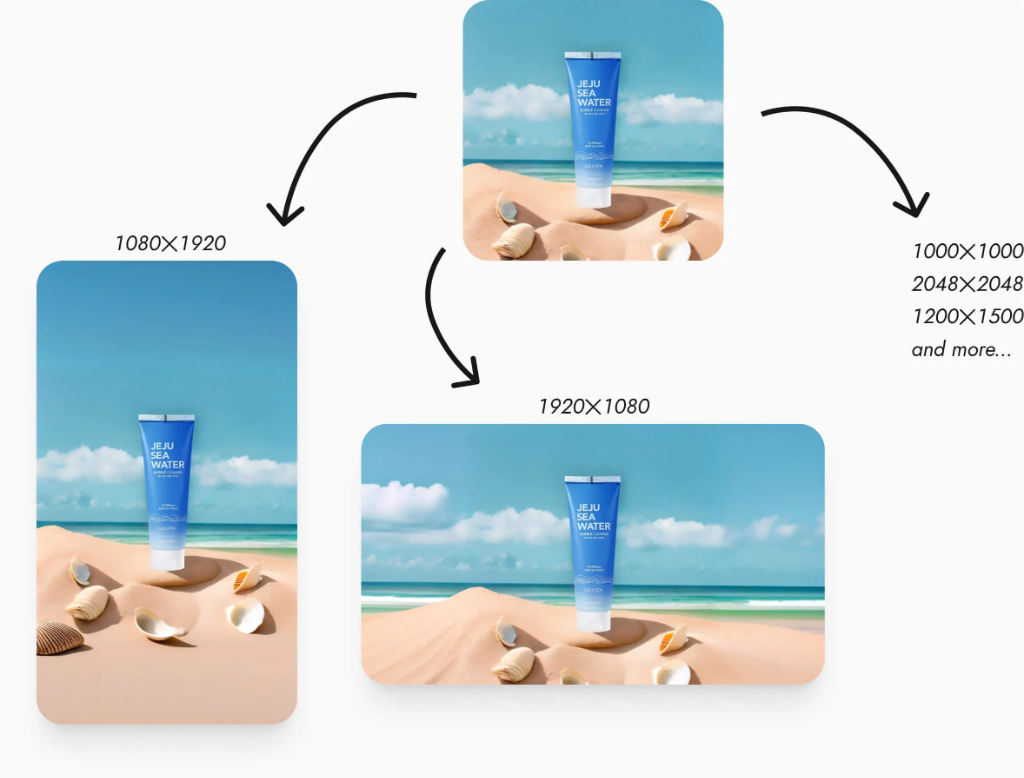
Multi-Format Auto-Resizing Engine
A core feature of the pipeline was the automatic composition adaptation. Using bounding box expansion and outpainting, the engine dynamically extended generated backgrounds to fit vertical (1080×1920), horizontal (1920×1080), and square formats without warping the product.
The Program Experience
Presenting to the frontier's leaders
The accelerator culminated in a closed-door showcase where we demoed our solution directly to tech visionaries. The feedback from this session reshaped our technical scaling guidelines.
“Using metadata rules and layout guides to constrain latent diffusion space is the right path forward for commercial creative engineering. You've solved the chaos of AI generation for real brands.”
Key Feedback Session · NYC Accelerator Showcase
“The speed of your SAM-based background isolation and SageMaker GPU cold-start management shows the power of edge-orchestrated serverless pipelines. This is Next.js at the limit.”
Key Feedback Session · San Francisco Showcase
“The localization capabilities and the automatic brand guideline checks solve a massive bottleneck in global marketing ops. This is highly practical.”
Key Feedback Session · Menlo Park Showcase
Practical Scenarios
Image generation in practice
We designed three distinct generation workflows representing the varying levels of complexity in product marketing photography operations.
“Place a raw bottle of perfume on a clean marble surface with soft natural background lighting.”
The Manual Friction
Requires a physical studio setup, sourcing marble slabs, setting light soft-boxes, and manual color-correction in Lightroom. (Takes 2–3 hours)
The Generative Studio Resolution
AWS Lambda processes the raw S3 upload, isolates boundaries with Meta SAM, applies ControlNet depth mapping, and renders the model on a marble countertop in 3.5 seconds.
“Render the winter skin cream collection with forest elements, matching the brand color palette (#4C6E5C and #C8B9A6) with a 45-degree hard shadow.”
The Manual Friction
Designers must manually overlay brand assets, adjust color tint values, paint hard shadows, and cross-reference brand guidelines for correctness. (Takes 4–5 hours)
The Generative Studio Resolution
Next.js Edge functions inject brand hex tokens directly from Sanity CMS into the Stable Diffusion 2.1 prompt builder, while ControlNet enforces the 45-degree shadow mask. (Resolves in 4.8 seconds)
“Take a single beverage bottle photo and produce 50 localized variants (e.g., Japanese cherry blossom, Parisian cafe, Milanese patio) matching regional market guidelines.”
The Manual Friction
Requires shipping physical product samples to global regional agencies, coordinating multiple local photographers, and managing multiple feedback loops. (Takes 4–6 weeks)
The Generative Studio Resolution
The system parallelizes 50 serverless GPU instances on AWS SageMaker, dynamically retrieves regional styling templates from Sanity, and builds a full global batch in 12 seconds.
Interface Showcase
Interactive generation and auditing tools
Creating AI product photos requires clean workspace interfaces. We designed our studio layout to place the product at the center, surrounded by prompt-tuning chips and real-time consistency checks.
The Generative Studio Canvas
The creator workspace. It lets users upload raw photos, select environment themes, set target lighting, and trigger the serverless AWS pipeline with real-time feedback.
AI Product Studio
Vercel AI SDK v0.1 Engine
- Control Interface — Provides simple selectors for environment backgrounds and lighting to completely hide complex prompt engineering details.
- Background Isolation Node — Instantly isolates product boundaries using Meta's Segment Anything Model (SAM) hosted on AWS Lambda.
The Brand Consistency Inspector
An automated quality-gate interface. It scans the generated images, matches pixel distributions against company brand tokens, and blocks off-brand colors or compositions.
- Compliance Audits — Scans pixel distributions and shadow parameters in Vercel Edge Functions, matching outputs against Sanity CMS brand design tokens.
- Direct Export — Instantly triggers optimized static builds on Vercel, bypassing the need for manual cropping or file compressing.
Unified Brand Campaigns
The final output of the generative studio: different products from the same brand catalog are automatically placed in identical environments, enforcing consistent shadows, reflections, and design guidelines (like the minimal white studio with monstera leaf accents).

Project Operations
Maintaining scaling parameters
We tracked model quality and design component metrics to ensure a smooth, predictable system rollout.
- Batches Tested
- 240+
- Model Pipelines
- 4
- VC Showcase Demoes
- 6
- Brand Tokens
- 180+
Closing Reflection
Coexistence of technology and experience
Enterprise marketing workflows are highly complex. Generative models cannot fully replace the years of experience creative directors bring to product styling, composition, and visual brand identity.
By treating AI not as an autonomous decision-maker, but as a brand-constrained rendering engine, we built a tool that empowers designers to scale creative campaigns quickly, safely, and with total visual compliance. Supporting human expertise remains the most reliable vector for enterprise AI integration.